5.23.21 AM Worship – Mark Day – Words of the Risen Lord
The Lord’s Vengeance Is Coming
The Lord will judge every man according to his works (Mt. 25:31-46; Jn. 12:48; Acts 17:30-31; Rom. 14:10; 2 Cor. 5:10; Rev. 20:12). Those that become unfaithful allow the Lord’s delay to convince them that they need not heed His word (Lk. 12:45, 46). The Lord’s vengeance is not a reality to them. In His mercy, the Lord delays exacting vengeance in order to give men time to repent instead of perishing (2 Pet. 3:8, 9). But evil men scoff at the idea that the Lord will return, being ignorant of the fact that the Lord has kept His promise of worldwide destruction before and He will be faithful to do it again (2 Pet. 3:3-12). While the Lord will certainly execute judgment in eternity, sometimes the Lord exacts vengeance in this life as well. Consider an example in the Old Testament.

In Deuteronomy 19:15-21, the Lord enacted laws to prevent false witnesses from condemning the innocent. Two witnesses were required. Additionally, if one was found to have borne false witness, then whatever penalty would have been executed on the accused would be exacted on the false witness. Sadly, these stringent regulations did not prevent evil men from perverting judgment throughout the history of Israel by means of false witnesses. Ahab and Jezebel orchestrated two debased men, sons of Belial, to bear false witness concerning Naboth so he would be stoned; then Ahab and Jezebel could take possession of his vineyard next to their house in Samaria (1 Kings 21).
The Lord’s prophet, Elijah, was sent to ask Ahab, “Have you murdered and also taken possession?”, and give this message: “Thus says the LORD: ‘In the place where dogs licked the blood of Naboth, dogs shall lick your blood, even yours’” (1 Kings 21:19). Jezebel, who invented the lie that caused the death of innocent Naboth (1 Kings 21:5-21), met a bloody demise just as the Lord determined (1 Kings 21:23; 2 Kings 9:30-37). Ahab, who abetted in lies for his own profit, was deceived by a lying spirit in the mouth of his false prophets into going to battle at Ramoth-gilead (1 Kings 22:20-23). The Lord’s prophet, Micaiah, said Israel would have no leader if they went to this battle (1 Kings 22:17). Did this mean Ahab would die? Certainly, if he was out in battle at Ramoth-gilead, then there was no way he would meet a death where the dogs licked his blood in Samaria, right? How could God’s warnings from Elijah and Micaiah both come about? Ahab thought he could deceive others by disguising himself in battle, but a stray arrow pierced him between the joints in his armor and he perished (1 Kings 22:30-38). The blood from his wound collected in the bottom of his chariot (1 Kings 22:35). “Then someone washed the chariot at a pool in Samaria, and the dogs licked up his blood while the harlots bathed, according to the word of the LORD which He had spoken” (1 Kings 22:38). Lord determined vengeance for the deceitful matter concerning Naboth, and it came to pass just as He said.
Heaven and earth will pass away, but the Lord’s word will not (Mt. 24:35). We will meet the Lord’s words in judgment (Jn. 12:48). The punishment determined for wickedness will take place (Rev. 21:8). Our only hope is to be washed in the blood of Jesus (Rev. 1:5), who delivers us from the wrath to come (1 Thess. 1:10). Will you choose to be baptized to have your sins washed away (Acts 22:16)? If you’ve done that, are you walking in the light so that you have fellowship with God’s people and continual cleansing by the blood of Christ (1 Jn. 1:5-9)? If not, do you think that you will escape the vengeance of God (Rom. 2:3)?
-Mark Day
5-19-21 Wednesday Night Bible Study – Devo – Mark Parks – If Your Brother Sins Against You
5-19-21 Wednesday Night Bible Study – Devo – Mark Parks – If Your Brother Sins Against You
Videos:
Passage 8 – Masada Fortress of Misplaced Faith
God and Rational Faith
5-16-21 PM Worship – Mark Day – What About Gambling?
5-16-21 PM Worship – Mark Day – What About Gambling?
Bible Study and Worship Guest Speaker – Dwane Casteel – Churches of Christ Disaster Relief Effort Inc.
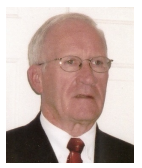 Dwane Casteel, Associate Director with Churches of Christ Disaster Relief Effort, Inc. based in Nashville, TN will be speaking to us about CCDRE’s purpose, the goal of the organization, along with how they prepare, and stay ready to send the basic needs and much more to those devastated by major disasters in the US. He’ll explain how they work through a local church of Christ near the disaster area to help those affected by the disaster. Dwane is a native of Philadelphia, Tennessee, and attended Freed-Hardeman College (now university), Shepherd College (now university), Delaware Technical and Community College, and Alabama Christian School of Religion, (now Amridge University). He served as a minister in West Virginia, Delaware and Alabama for 40 years, and made over 40 mission trips to China, Cuba, Dominican Republic, and Jamaica before beginning his current duties with CCDRE. Dwane married his wife Betty Gibboney in 1958, and they live in West Virginia. They have 3 children, 7 grandchildren (one deceased), 6 great-grandchildren, and 1 great-great grandchild. Dwane travels throughout the Northeast to make congregations more aware of CCDRE’s mission, and to secure financial support so that we might be able to help those disaster victims, even from hundreds of miles away.
To read more about the work of CCDRE, go to: disasterreliefeffort.org or facebook.com/disasterreliefeffort
- « Previous Page
- 1
- …
- 214
- 215
- 216
- 217
- 218
- …
- 464
- Next Page »