
04.26.20 AM – Mark Day – Fire in My Bones
04.26.20 AM – Mark Day – Fire in My Bones
Jeremiah was a prophet who experienced great hardship. If we had to undergo the trials Jeremiah faced, we would likely not hold up as well as he did. We would find it hard to be joyful. Even residents of his hometown, Anathoth, were plotting to murder him. When the prophet grew impatient and complained to God about his wicked persecutors, God promised He would punish them (Jer. 11:21-23). Yet, God also gave Jeremiah a challenge for greater faith, asking, “If you have run with the footmen, and they have wearied you, then how can you contend with horses? And if in the land of peace, in which you trusted, they wearied you, then how will you do in the floodplain of the Jordan?” (Jer. 12:5).
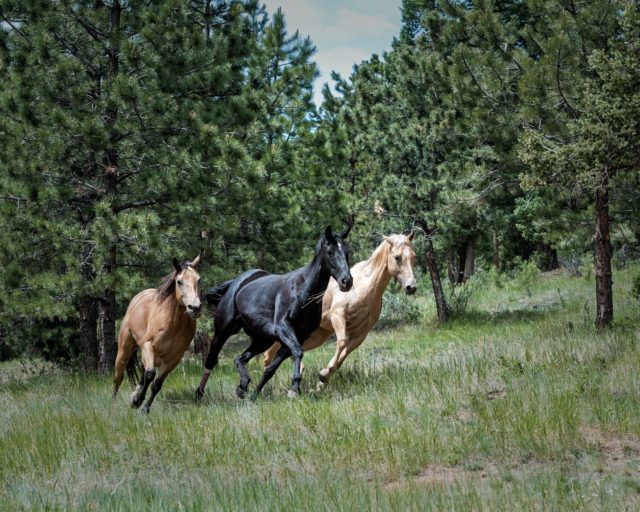
Jeremiah had become wearied or impatient with the footmen. False prophets who said Judah would never be destroyed contended with Jeremiah who preached the truth that God would use Babylon to punish Judah for her sins. God said of these false prophets, “I have not sent these prophets, yet they ran. I have not spoken to them, yet they prophesied” (Jer. 23:21). The false prophets who contended with Jeremiah gave him a good run and caused him to become weary. Yet, things were about to get worse.
Jeremiah was wearied when the land of Judah was still “a land of peace,” but soon Babylon would come with a flood of cavalry. The Hebrew word translated “contend” in Jeremiah 12:5 means to “become hot” or “angry;” it seems to refer to a heated race. Jeremiah had not seen anything yet. Soon, he would race horses.
Who can win a footrace with a horse? Oddly enough, there are annual races in our world that test this very question. Since 1980 an annual horse vs. man marathon has been held near Llanwrtyd Wells, a town in Wales. Only twice (2004 and 2007) has a human won—when weather conditions were particularly hot. In our own country, Prescott, AZ hosts an annual “Man Against Horse” race with distances up to 50 miles. Humans seem to have a better chance at winning the hotter the weather and the longer the distance.
Sometimes we must go through a “fiery trial” (1 Pet. 4:12). No matter how hard life gets, it could always be worse. God tested His people in ancient times in the “furnace of affliction” (Isa. 48:10). Today, we go through tests of our faith as well. Yet, we must not give up. We must remember that the Christian life is an endurance race (Heb. 12:1). We must not grow weary in doing good (Gal. 6:9; 2 Thess. 3:13). Keep fighting the good fight and keeping the faith until your race is finished and you receive the crown of righteousness at the last day (2 Tim. 4:7-8).
-Mark Day
04.19.20 PM – Mark Day – Taking Away the Veil
II Corinthians 2:14-16

04.19.20 AM – Mark Day – The Devil’s Lie
With the changes that have recently taken place in our lives, one that has stood above the rest is not seeing my brothers and sisters in Christ on a weekly basis. The truth is most of us have not appreciated the blessing of communing with our Lord regularly until now. What I miss most is what the Church has been doing since it was established (Acts 2:41-42). How we long to return to God and one another! Part of God’s plan for the Church was for us to encourage one another when we meet (1 Thess. 5:11-13). Though we are not meeting physically currently, we can still encourage one another in different ways. Take heart that we are not the first to be in this position. In fact, God’s people spent a majority of their time longing to return as well.

While in Egypt, Israel longed for God like we could never understand. They were in bondage; unable to enjoy the freedoms we are blessed with (Ex. 2:23-25). They certainly were not allowed to worship God as He desired while in Egypt. Moses was sent to Pharaoh so that the Israelites could go into the desert and sacrifice to the Lord (Ex. 5:3). They were not allowed to worship God, but instead were given more work by Pharaoh (Ex. 5:8b-9). Later on, Pharaoh desired to compromise with Moses. Pharaoh would allow them to worship in Egypt, but would not allow them to go into the wilderness. This compromise was not acceptable to God and therefore was turned down; Israel was still unable to worship (Ex. 8:25-27). We long to open these doors once again, but could you imagine the longing these Israelites must have had for God? How blessed we are!
The Psalms are full of writers who were longing for God (Ps. 42:1-2; 63:1; 73:25; 119:20; 119:81; 143:6-7). It is fair to say this is a continuous theme throughout. One Psalmist in particular highlighted his unrelenting desire to return to worship God with his people (Ps. 122). David sought to worship God (vs. 1-3) and to be with his people in Jerusalem (vs. 4-9). In the Old Covenant, the Jews were commanded to meet together only three times a year for festivals (Ex. 34:23; Deut. 16:16). The synagogues were not established till Israel was taken into captivity, meaning there were no weekly assemblies during the time of David. The three times a year that David went to the house of the Lord were special to him! Now that we are unable to worship God on a weekly basis, when things return to normal, will they be special to us?
During Israel’s time in the promise land, they did not long for God as they ought to. They instead worshiped idols and false gods (Judg. 2:11-14; 2 Kgs. 17:10-23). All the way up to their exile and Jerusalem’s destruction, Israel forsook God (Jer. 44:1-22). Yet, when God allowed the Israelites to return from exile, they longed to serve Him (Ezra 6:19-22; 7:10; 8:21-23; 10:1-ff). When Nehemiah brought another wave of exiles back to Jerusalem, they showed a new dedication to keeping God’s Law that their forefathers never did (Neh. 8:1-12). They longed to keep God’s word, how about you?
These are certainly unprecedented times we are currently in, but take heart that we are not the first to long for normalcy to return. The Israelites in Egypt, David, and the exiled Jews longed for God. They were unable to meet for a time but when the opportunity arose, they appreciated the time they had with God and each other even more. Will you have a new appreciation for God and His people when the Church gathers again? It is my prayer that this short time away from one another will magnify the importance of the Church coming together when we are able (Heb. 10:24-25).
–Brandon Foresha