Flatwoods church of Christ

  • Home
  • News
  • Media
    • Articles
    • Bible Studies
    • Gospel Meeting
    • Lesson Audio
    • Video
  • Members
  • Peru Mission
  • About Us
    • Plan of Salvation
    • Staff, Elders, and Deacons
  • Library
    • Correspondence Course
    • Links
    • Preach the Word
  • Visit
    • What To Expect
  • Contact
You are here: Home / Archives for admin

Preparing to Build the Temple

March 26, 2015 by admin 2 Comments

In 2 Samuel 7, we learn that David wanted to build a temple to God, but the Lord gave that privilege to his son instead. David then made preparations for the building of the temple while he was reigning so that his son Solomon would build the temple when he took the throne. Toward the end of his reign in 1 Chronicles 29:1-9, David gave the final provisions for the building of the temple before he would die (1 Chronicles 29:28 says he died in a good old age). There are spiritual principles even in this preparation for the Old Testament temple that we can apply today in the church, the New Testament temple (1 Corinthians 3:16, Ephesians 2:21).

synagogue-458369_1280
What the Jews often cherished about the temple was its grandeur and splendor. Even in the first century AD, when the temple was rebuilt under Herod’s reign, the disciples of Jesus wanted to show Him the buildings of the temple complex (Matthew 24:1). As some spoke of the temple, how it was adorned with magnificent stones and offerings (Luke 21:5). But those physical features were not what really made the temple of great value. The value of the temple was that God manifested His presence there. Solomon recognized when he built it that it could not contain God (1 Kings 8:27); nothing on earth can, but, nevertheless, the glory of the Lord filled the temple, as a demonstration of His presence (1 Kings 8:10-11). There are some fine people in the Lord’s church, but what makes the Lord’s church so precious is God’s presence among His people. The reason God’s people are holy is because they belong to the Holy God. 2 Corinthians 6:16 says, “for ye are the temple of the living God; as God hath said, I will dwell in them, and walk in them; and I will be their God, and they shall be my people.” The Old Testament temple was built for Israel to have fellowship with God. The reason Jesus Christ built the church is so that men might have fellowship with God in the church (Ephesians 1:22-23; 2:16).

 
In accordance with this truth, David realized in the long ago that his preparation for the Lord’s temple was not work that he was doing for man, but for God. In 1 Chronicles 29:1, he said, “for the palace is not for man, but for the LORD God.” That fact made all the difference for David in the importance of building the temple. Because he was preparing a place for God, David said, “I have prepared with all my might…” (1 Chronicles 29:2). Do we in the church prepare with all our might to worship, to serve, to evangelize? There are examples all about us of people who give all their might to climb the corporate ladder, win a championship in sports, or accomplish any number of earthly achievements. Shouldn’t we have at least that level of energy and zeal when it comes to working in the Lord’s church? 1 Corinthians 9:25 says, “Now they do it to obtain a corruptible crown; but we an incorruptible.”

 
David was willing to sacrifice himself for the temple. 1 Chronicles 29:3 indicates that not only did he give of the king’s treasury for the work, but also of his own private treasure. 1 Chronicles 29:5-9 reveals how that the chief men followed David’s example and gave willingly. When we give of our money, time, talents, and energy to the Lord, do we do it willingly and happily? There is no greater joy than to serve the Lord out of a willing heart.

 
As the church we are part of a greater temple than David ever knew in his time. Let’s mimic his example and enthusiasm for preparing to build the temple of the Lord.

-by Mark Day

Filed Under: Articles

Lesson Audio – God is Not Mocked

March 22, 2015 by admin Leave a Comment

beans

03.22.15 pm – Mark Day – God Is Not Mocked – Lesson on reaping what you sow and the eternal consequences of what we sow in this life.
Scripture Reading – Galatians 6:7-10
https://flatwoodschurchofchrist.org/wp-content/uploads/2015/03/T024_03.22.15-pm-Mark-Day-God-Is-Not-Mocked.mp3

Filed Under: Lesson Audio

Lesson Audio – If I Were a Better Preacher

March 22, 2015 by admin Leave a Comment

preacher

03.22.15 am – Mark Day – If I Were a Better Preacher – A lesson on Christian life, evangelism, and being better for Christ and the word.

https://flatwoodschurchofchrist.org/wp-content/uploads/2015/03/T023_03.22.15-am-Mark-Day-If-I-Were-a-Better-Preacher.mp3

Filed Under: Lesson Audio

the Herald bulletin March 22nd edition

March 19, 2015 by admin Leave a Comment

the Herald bulletin March 22nd edition

Filed Under: Members

Teaching the Uninformed

March 19, 2015 by admin Leave a Comment

When Paul arrived at Athens, he was moved by the pervasive idolatry in the city (Acts 17:16). He began to dispute with philosophers and idolaters that filled Athens and was even brought by them to the Areopagus in order to hear this “new doctrine” he was teaching (Acts 17:18-19). Now how was Paul going to present the gospel to these Athenians? Would he quote the Old Testament and appeal to Jesus’ fulfillment of the prophecies as he did in Antioch of Pisidia in Acts 13:16-41? No. These Athenians had little if any knowledge of the Old Testament, and did not have the proper concept of the true God. Thus we find Paul establishing some more basic truths in his sermon in Acts 17.
 
buddha-204279_1280
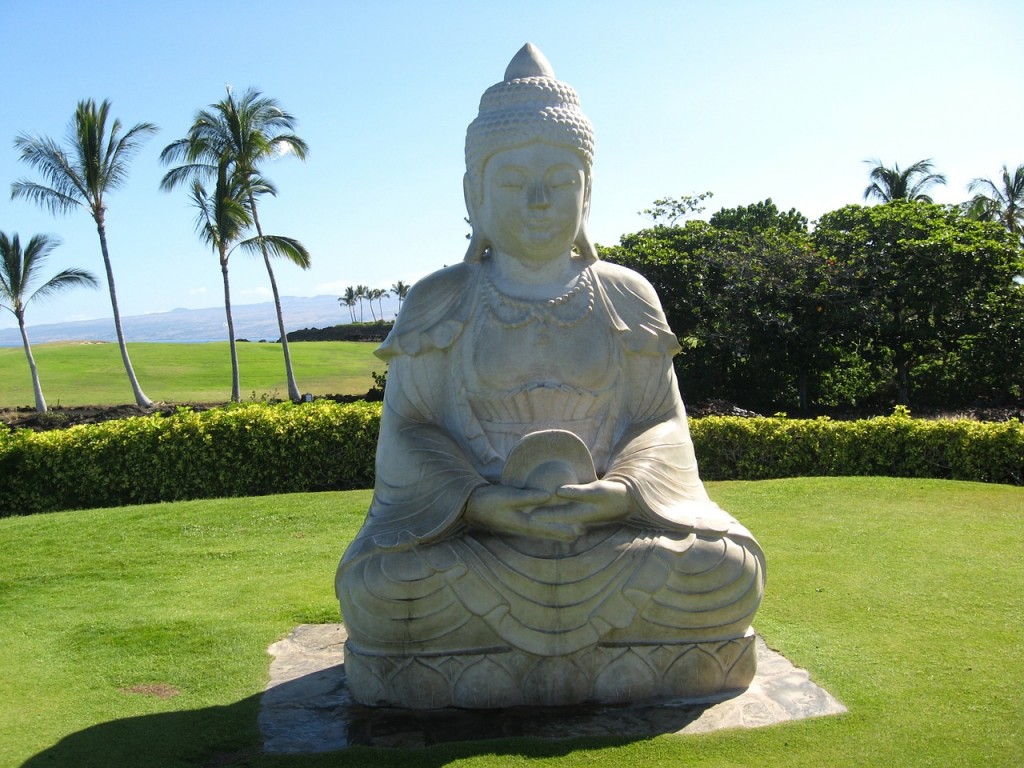
Paul first combated the prevailing belief of pantheism among his audience. Pantheism is the belief that the world is deity. Paul shows how God is the creator of the world and all things therein, but is also distinct from the world (Acts 17:24). Next, Paul countered the assumption that deity is limited to a certain locale and has human-like needs. God does not dwell in temples made with hands (Acts 17:24). As Solomon recognized when the temple was built, nothing in this world can contain God because He is everywhere (1 Kings 8:27). God also does not need anything from mankind to continue to prosper, but instead is the sustainer of all things (Acts 17:25). God is self-existent and can live independently of all other beings; we, on the other hand, are completely dependent on Him.
 
After establishing some truths about God, Paul teaches the Athenians some truths about man. Contrary to the beliefs of many throughout history, the different ethnic groups that exist in the world do not have varying values. They did not come into being from different sources, but are all of one blood (Acts 17:26). Thus, the message of salvation is for all nations who inhabit the earth.
 
As a balance to the truth that God is distinct from the world, Paul goes on to point out that God desires men to seek Him. Contrary to many of the philosophers in Athens who believed in an impersonal God, Paul taught the truth that God, while being transcendent of the world, also desired personal involvement with His creatures. Thus, he declared the reason for our lives on this earth is that we should seek the Lord, who is distinct from the world, but not so distant that He cannot be reached (Acts 17:27). Paul even used the words of Cleanthes, a Stoic, who acknowledged that man is the offspring of God, to hammer home the acknowledged truth of God’s operating within the universe (Acts 17:28).
 
In conclusion, Paul shows that the above truths make idolatry wrong (Acts 17:29). Thus, he pleads with the Athenians to give up these practices, which are offensive to the true God, and turn to Him (Acts 17:30). It is only at the end of establishing these truths that Paul mentions the resurrection of Christ, which is fundamental to the gospel message (Acts 17:31).
 
In twenty-first century America, we cannot assume that those outside of Christ have biblical notions of God. Like the Athenians, many Americans may have never heard the most basic concepts of Christianity, and to them these truths may be considered “new doctrine” (Acts 17:19). As laborers for the harvest (Luke 10:2), we should be prepared to meet people where they are like Paul did with the Athenians. Are you ready to talk to people about moral absolutes, the exclusivity of truth, the nature of God, the concept of holiness, the definition of sin, the certainty of an afterlife, and many other issues that we often assume people understand? Let’s make sure people understand these concepts when we evangelize.
 
–Mark Day

Filed Under: Articles

  • « Previous Page
  • 1
  • …
  • 586
  • 587
  • 588
  • 589
  • 590
  • …
  • 613
  • Next Page »
subscribe"

Contact

Flatwoods Church of Christ
PO Box 871
2100 Argillite Rd.
Flatwoods, KY
41139

606.836.4207

Service Times

Sunday Morning Worship – 9:30 am
Sunday Bible Study – 10:45 am
Sunday Evening Worship – 6:00 pm
Wednesday Evening Worship – 7:00 pm

Featured Posts

Photo by Eeshan Garg on Unsplash

4.1.26 Wednesday Bible Study – Devo by Matt Vonderheide – Standing Apart Without Standing Alone

Photo by Aaron Burden on Unsplash

 WELCOME!

3.29.26 PM Worship – Todd Parsley – The Commands of God – Matthew 28:18-20

Topical Study

Baptism belief bible class bible questions and answers bible study blessing Brandon Foresha Buck Wheeler bulletin change Chris French Chris Scott christian dispensation christian life David Trimble devo faith faithful family father God gospel Gospel Meeting Greg Hall heaven hope Jerry Strugill Jerry Sturgill jesus Joy king Mark Day Mark Your Bible Series miracles Nathan Adkins Nathan Parks obedience old covenant Paul peace Romans salvation sin soul the church

Copyright © 2026 · Outreach Pro on Genesis Framework · WordPress · Log in


Loading Comments...